Holding Bin vs. Workbench: Two Editing Workflows
Published April 14, 2026
A lot of people ask which workflow to use first. Short answer: both are useful, but for different jobs. Here's the practical breakdown.
Holding Bin + Timeline
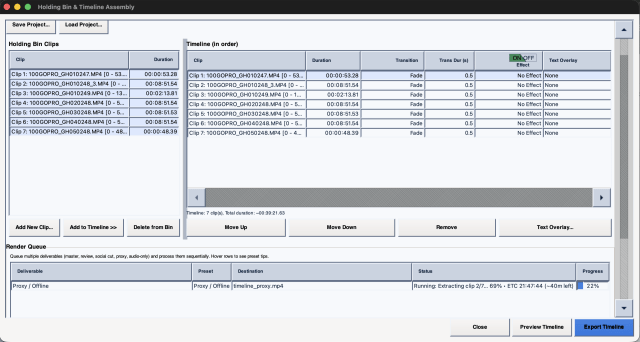
This is the workflow to use when you want to assemble a full edit — add clips, trim, reorder, apply transitions, add effects, add text overlays, and export final deliverables. The source files stay completely untouched until render time.
- Highlight reels and story edits
- Multi-clip projects where order matters
- Adding text overlays and transitions
- Any job where you want clean, non-destructive control before committing to a render
Workbench
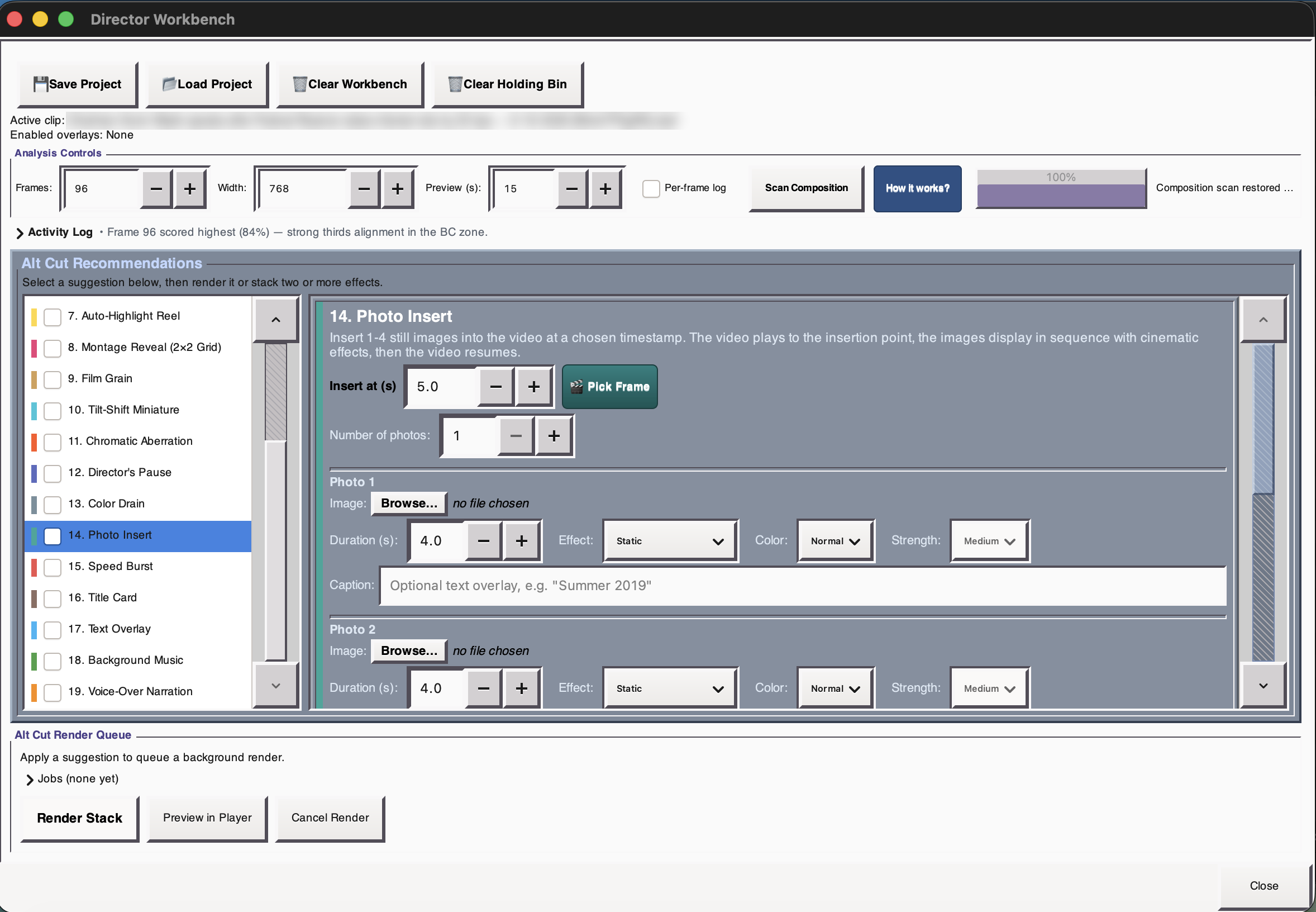
Workbench is the workflow to use when you already have files and want to apply effects or transcodes directly. It's simpler, faster to set up, and great for quick deliverables or batch-style operations where you don't need timeline sequencing.
- Quick conversions and format changes
- Batch cleanup and processing runs
- Applying a single effect stack to one or more files
- Jobs where you want output fast with minimal setup
Side-by-Side Comparison
| Category | Holding Bin + Timeline | Workbench |
|---|---|---|
| Main goal | Build a complete edit from multiple clips | Process existing clips quickly |
| Editing style | Sequencing, trimming, transitions, effects, text overlays, timeline composition | Direct effect / convert workflow on source files |
| Speed to first output | Medium — more setup, more flexibility | Fast — less setup, direct output |
| Best use case | Narrative edits, reels, assembled projects | Batch cleanup, quick versions, direct conversions |
My Recommendation
Start with the workflow that matches the job. If you're still deciding, begin in Workbench for speed — then switch to Holding Bin + Timeline when you need full timeline control. Both are built into FFmpeg Commander and you can move between them any time.
Both workflows are built into FFmpeg Commander — one-time purchase, no subscription.
Get FFmpeg Commander — $45 →New to FFmpeg? See how to use FFmpeg without the command line.
FFmpeg Commander Video Toolbox — 2026